Motion
Watch where the cells are going, not only where they are. A storm that looks distant can matter if its track aims at your road, school, or commute window.
Radar Room
Radar apps make storms look simple: green, yellow, red, purple. The real value is in motion and persistence. A bright cell that passes quickly may be less disruptive than moderate rain that repeats over the same low road. A thin line can produce abrupt wind even when totals stay modest. Stormy Casa teaches readers to slow down, watch several frames, and connect what appears on screen to the actual vulnerabilities around home.
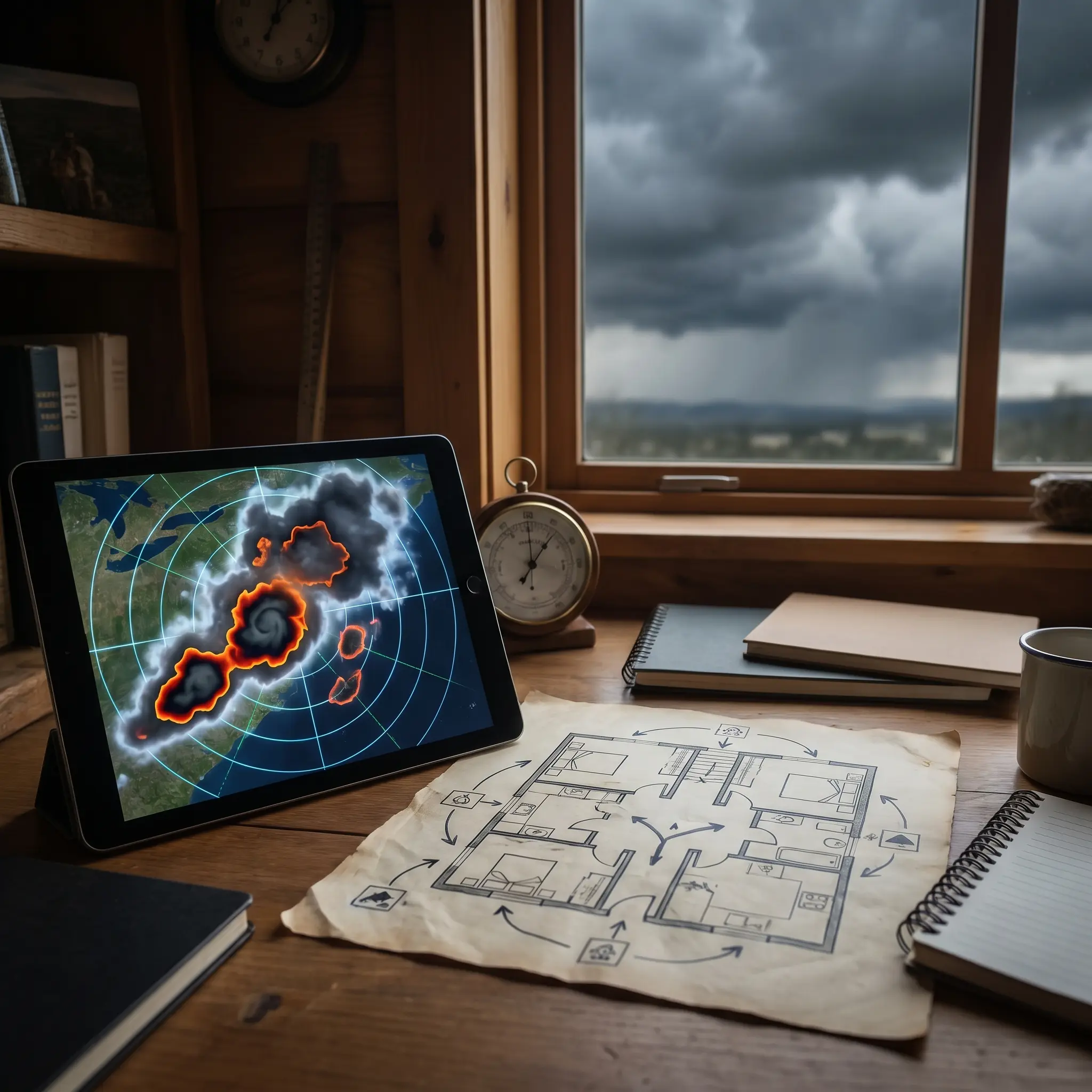
Watch where the cells are going, not only where they are. A storm that looks distant can matter if its track aims at your road, school, or commute window.
A bowing line can suggest strong straight-line winds, while repeated cells over the same corridor raise flood concern even without dramatic lightning.
One radar frame is a photograph. Several frames are the story. Compare intensity, direction, and whether new storms keep forming upstream.
When severe weather is possible, choose two fixed check times instead of refreshing constantly. At each check, note the leading edge, the heaviest rainfall core, any new development behind the first line, and the latest official alert language. That rhythm keeps attention available for useful tasks: moving cars from low spots, clearing a drain, preparing the safest interior room, or delaying a trip that would cross the storm path.